
Actualité

Baromètre 2024 des usages du livre imprimé, numérique et audio
La SOFIA, le SNE et la SGDL publient les résultats de la 13ème édition du baromètre des usages du livre numérique. Menée par Médiamétrie au début de l’année 2024, cette enquête étudie les habitudes d’achat et de lecture des Français de 15 ans et plus au cours de l’année 2023.
Livre d’occasion : publication d’une étude par le ministère de la Culture et la SOFIA
Les résultats d’une étude inédite sur le marché du livre d’occasion en France ont été publiés par le ministère de la Culture et la SOFIA le 10/04/2024.

La SGDL et le SNE créent, avec le soutien de la SOFIA, un fonds pour l’indemnisation des auteurs en cas de liquidation judiciaire de leur maison d’édition
Dans le cadre de leur mission de défense de la culture et du droit d’auteur, la SGDL et le SNE s’associent pour créer, avec le soutien de la SOFIA, un fonds d’indemnisation venant renforcer la protection des auteurs en cas de liquidation judiciaire d’une société d’édition.

Le Baromètre 2024 sur les usages des livres imprimés, numériques et audio présenté au Festival du Livre de Paris
La 13e édition du baromètre sur les usages des livres imprimés, numériques et audio sera présenté le 12 avril à 10h au Festival du Livre de Paris.
Commission IA : les secteurs créatifs et culturels accueillent avec soulagement un rapport équilibré
La Sofia est membre du collectif de la création et des industries culturelles qui réunit les voix des arts graphiques et plastiques, de l’audiovisuel, du cinéma, du jeu, du livre, de la musique et de la presse dans le contexte du développement des applications génératives de l’intelligence artificielle.
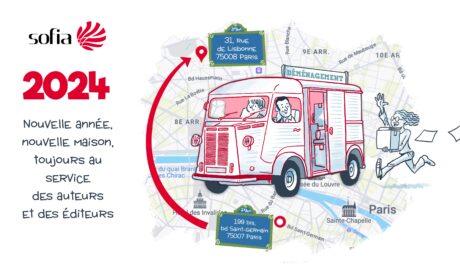
La Sofia déménage
La Sofia déménage dans de nouveaux locaux. Elle aura donc une nouvelle adresse à partir du 4 mars 2024 qui sera le 31, rue de Lisbonne 75008 Paris.. (c) Nicolas Caruso
Baromètre 2024 des usages du livre imprimé, numérique et audio
La SOFIA, le SNE et la SGDL publient les résultats de la 13ème édition du baromètre des usages du livre numérique. Menée par Médiamétrie au début de l’année 2024, cette enquête étudie les habitudes d’achat et de lecture des Français de 15 ans et plus au cours de l’année 2023.
Livre d’occasion : publication d’une étude par le ministère de la Culture et la SOFIA
Les résultats d’une étude inédite sur le marché du livre d’occasion en France ont été publiés par le ministère de la Culture et la SOFIA le 10/04/2024.
La SGDL et le SNE créent, avec le soutien de la SOFIA, un fonds pour l’indemnisation des auteurs en cas de liquidation judiciaire de leur maison d’édition
Dans le cadre de leur mission de défense de la culture et du droit d’auteur, la SGDL et le SNE s’associent pour créer, avec le soutien de la SOFIA, un fonds d’indemnisation venant renforcer la protection des auteurs en cas de liquidation judiciaire d’une société d’édition.
Le Baromètre 2024 sur les usages des livres imprimés, numériques et audio présenté au Festival du Livre de Paris
La 13e édition du baromètre sur les usages des livres imprimés, numériques et audio sera présenté le 12 avril à 10h au Festival du Livre de Paris.
Commission IA : les secteurs créatifs et culturels accueillent avec soulagement un rapport équilibré
La Sofia est membre du collectif de la création et des industries culturelles qui réunit les voix des arts graphiques et plastiques, de l’audiovisuel, du cinéma, du jeu, du livre, de la musique et de la presse dans le contexte du développement des applications génératives de l’intelligence artificielle.
La Sofia déménage
La Sofia déménage dans de nouveaux locaux. Elle aura donc une nouvelle adresse à partir du 4 mars 2024 qui sera le 31, rue de Lisbonne 75008 Paris.. (c) Nicolas Caruso